
The government has decided to hold off introducing the production-linked incentive (PLI) scheme for additional sectors until it verifies the efficacy of existing initiatives. Top government officials have received mixed feedback on the scheme, including insights from the Economic Advisory Council to the Prime Minister, people aware of the matter said. "There are no new PLI schemes in the offing.

Nirma's tryst with the pharmaceutical space started in 2006 when it acquired the ailing Core Healthcare in a deal reported to be worth Rs 300 crore. The Ahmedabad-based manufacturer of intravenous fluids was subsequently renamed Nirlife. Pharma industry insiders say Nirma, which broke open the detergent market in the 1990s with low prices and massive advertising, tried an encore of the low-price strategy in pharma, but with mixed results.

The Income Tax department Wednesday conducted searches at the premises of Bengaluru-based pharmaceutical company Micro Labs Ltd, the manufacturers of Dolo-650 tablet that was widely used by COVID-19 patients during the last over two years, on charges of alleged tax evasion. Officials said the department is looking at financial documents, balance sheets and business distributor networks of the company as part of the searches. The PTI has sent queries on the action to the company and a response is awaited.

US-based retail giant Walmart is looking to source toys, shoes and bicycles from Indian suppliers as the company is targeting to increase its exports from India to USD 10 billion annually by 2027. The company also wants to develop new suppliers in categories such as food, pharmaceuticals, consumables, health and wellness, and apparel and home textiles, a company spokesperson told PTI. Officials from the Bentonville-headquartered firm recently held a virtual meeting with several domestic toy manufacturers in India.

The same day the tax sleuths had raided the house of DMK MP S Jagathrakshakan and some of those linked to him. The MP from Arakkonam has interests in a variety of business sectors.

Actor Poonam Pandey is not being considered as the brand ambassador of the government's national campaign to spread awareness on cervical cancer, Union health ministry officials said on Wednesday.
The total incentive outgo under the ambitious production-linked incentive (PLI) scheme is estimated to be less than Rs. 40,000 crore by the fiscal year 2024-25 (FY25), when it completes the fourth year of implementation, according to the government's internal estimates. This means only a fourth of the allocated Rs 1.97 trillion is expected to be utilised by the end of FY24, indicating that not all the 14 PLI schemes would have taken off fully. While three of the 14 schemes - large-scale electronics manufacturing, bulk drugs, and medical devices - were introduced in 2020, the remaining were launched the following year.

A team of central agencies and the Uttar Pradesh drug department had carried out an inspection at the firm's office in Noida on December 29 and taken six more samples for testing.
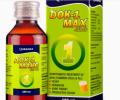
The Central Drugs Standard Control Organisation (CDSCO) has initiated a probe in connection with the death of 18 children in Uzbekistan allegedly linked to Marion Biotech.

India's drug regulator has initiated a probe and sought further details from the WHO after the global health body issued an alert that cough syrups manufactured by an Indian firm could potentially be linked to the death of children in Gambia.

Exports declined for the fourth-consecutive month by 10.3 per cent year-on-year to $34.98 billion in May, while the trade deficit widened to a five-month high of $22.12 billion. According to the data released by the commerce ministry on Thursday, key export sectors recording negative growth include petroleum products, gems and jewellery, engineering goods, ready-made garments of all textiles and chemicals. Imports also declined 6.6 per cent, six-month in a row, to $57.1 billion against $61.13 billion in the same month last year, the data showed.
The minister will review the COVID-19 situation at 11:30 am on Wednesday 'considering the international scenario', they said.
Samples of the cough syrup have been taken from the manufacturing premises in Noida and sent to the Regional Drugs Testing Laboratory (RDTL) in Chandigarh for testing, Mandaviya said.

A joint team of the state and the Centre inspected the unit and found 12 violations or deficiencies.
The drug maker will lose some incentives if its membership is suspended, sources in Pharmexcil said.
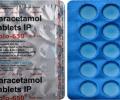
The claims were made after the Income Tax department had on July 6 raided 36 premises of the Bengaluru-based Micro Labs Ltd. across nine states.

The Union home ministry said several steps have been taken to augment the production and supply of Remdesivir injections from 38.80 lakh units per month to 74 lakh units per month by early next month, and asked the states to ensure its seamless supply and transport.

The Union health ministry on Friday said license has been given to five more manufacturers for production of Amphotericin-B, used in the treatment of black fungus, and they will start producing 1,11,000 vials of the drug per month from July.

The central government has for the first time allowed a private company, Bajaj Healthcare, to process opium to extract alkaloids used to make pain-killers, cough syrups, and even cancer drugs. Two government factories in Ghazipur, Uttar Pradesh, and Neemuch, Madhya Pradesh, do the work yet, processing some 800 tonnes of opium gum annually to extract alkaloids. The government on Tuesday gave Thane-based Bajaj Healthcare an initial contract to process 500 tonnes of opium gum annually and wants production to be at 800 tonnes per annum (tpa) in the next five years, indicating the state's exit from the highly-regulated sector.

The department of commerce has urged the agriculture ministry as well as the diplomatic mission in Tehran to apprise it of details as to why Iranian buyers have stopped import of rice and tea from India, a senior government official said. Exporters said that exports of items such as high quality tea and rice have stopped since last week. As of now, there has been no confirmation from the authorities and the response from the embassy in Tehran is also taking time, they said.

The inspection at Marion Biotech started at around 12 pm and continued for over 10 hours during which six more samples of the syrup were taken, they said.
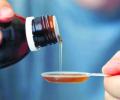
'The deaths of the children in the Gambia would batter India's reputation as the developing world's pharmacy.'
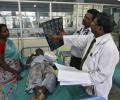
The government is targeting 1,200 technical collaborations between Japanese companies and Indian investors for over Rs 42,000 crore, 200 joint ventures with overseas investors for Rs 14,000 crore, and another Rs 14,000-crore investment from about 50 multinational companies.

The finance ministry on Friday withdrew expenditure curbs on various departments and ministries imposed in June in the wake of the COVID-19 second wave, reflecting improvement in public finances and the urgency to step up growth.

India and the US on Thursday said they are looking forward to the reconvening of the India-US Trade Policy Forum later this year to further enhance trade relationship and identify new areas for engagement.
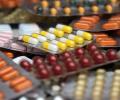
As uncertainty looms large in Afghanistan, Indian pharma exporters are apprehensive to send goods to the war-torn country and the target of exporting $126 million worth of pharmaceutical goods to the Taliban-ruling nation now depends on the future outcome. Udaya Bhaskar, director general of Pharmaceuticals Export Promotion Council of India (Pharmexcil) body under the Department of Commerce on Tuesday said as the situation is grim over there and India pharma exporters have cordial relations with Afghanistan. "The projected target for 2021-22 is $126.22 million.

The US on Thursday raised concerns over India's Personal Data Protection (PDP) Bill and draft non-personal data governance framework, claiming these could potentially threaten innovation and economic growth. In its latest 'Special 301' Report, the US Trade Representative (USTR) kept India on the priority watch list, maintaining the country remains one of the world's most challenging major economies with respect to protection and enforcement of intellectual property (IP). In December 2021, a joint parliamentary committee released a report recommending changes to the PDP Bill, 2019, that could undermine important IP protections in India.
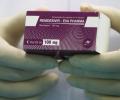
Remdesivir is considered a key anti-viral drug in the fight against Covid-19. In addition, the government has taken three steps to ensure easy access of hospitals and patients to Remdesivir.
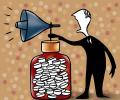
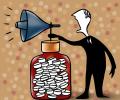
'Gift-giving' - from free dinners and drug samples to promotional merchandise - seems to be driving drugmakers' marketing - a marketing prescription deeply entrenched in the industry. This is a well-oiled racket that sees pharmaceutical (pharma) companies 'gifting' doctors to push their respective drugs under the guise of marketing. But is there a cure in sight to end this unhealthy alliance? The recent controversy following the income-tax raids on Bengaluru-based drugmaker Micro Labs, makers of popular paracetamol brand Dolo-650, has brought this to the fore, again.

The "wealthy pharmaceutical executive" was followed for 50 miles (80 kms) from a Pennsylvania casino to his New Jersey home where he was murdered in an attempted robbery while his wife and daughter were sleeping, the New York Post newspaper quoted the police as saying.

From the seas to the stars, this partnership will now be deepened by the defining role of technology, the statement said.

He has been appointed as the TRAI chief for three years or till he attains the age of 65.

He urged people not to panic and clarified that there was no change in the guidelines for international air travel so far.

The government may soon give the green light to bilateral trade between Russia and India in their national currencies to avoid any trade disruptions, multiple people aware of the matter said. While the Department of Commerce has recommended the proposal, an announcement is likely to be made by the finance ministry after further deliberations between the Department of Economic Affairs and Department of Financial Services. "The finance ministry will take a call on how to peg the two currencies," a senior government official told Business Standard. In the past, the two nations have had rupee-rouble trade, and when such an arrangement is implemented again, it will bypass the sanctions imposed on Russia by the West.

This import duty exemption would remain in force till October 31 this year.

Abdul Aala Fazili was arrested from his Humhama residence as the SIA conducted searches at several locations in the city as part of its crackdown on terror and anti-national networks, the official said.
Exports of 13 APIs - including paracetamol, tinidazole, metronidazole, vitamin B1, vitamin B6, vitamin B12, acyclovir, progesterone - along with formulations made from these APIs, would be restricted.
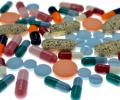
Indian pharmaceutical companies are heavily dependent on China to source fermentation-based active pharmaceutical ingredients and intermediates to manufacture these medicines, but the coronavirus outbreak there has disrupted the supply.

COVID-19 is on the verge of becoming endemic but Indian scientists are keeping a close watch on each new variant and the government would continue to maintain a high alert, Union health minister Mansukh Mandaviya has said, underlining that the virus has managed to survive and is going to stay.

'As the Indian economy continues to expand over the next three years, mid- and small-caps should do well as they have higher exposure to the domestic economy than large-caps.'
